Address Clustering Heuristics: How Blockchain Analysis Works
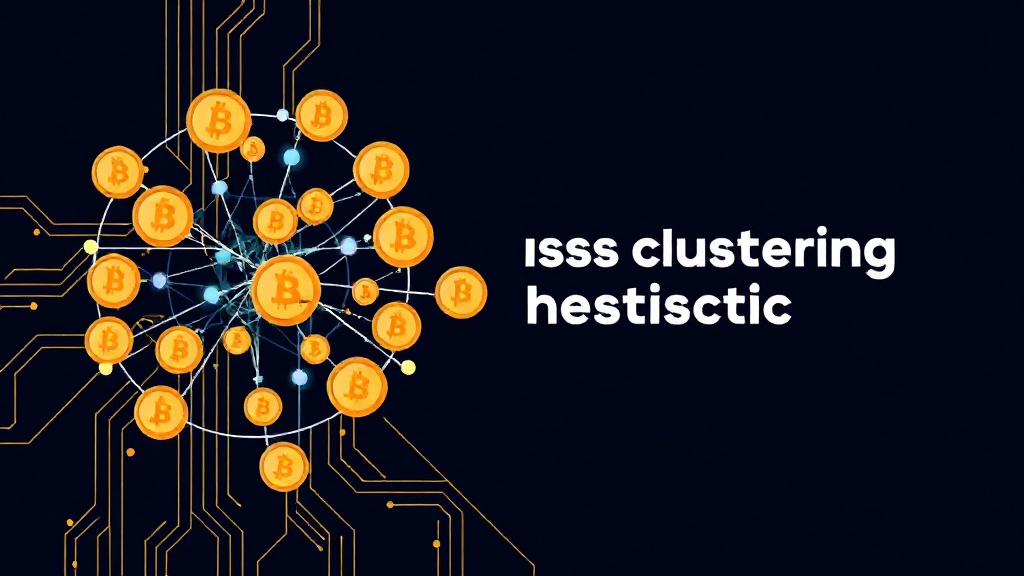
What Is Address Clustering in Cryptocurrency?
Address clustering is a key technique used in blockchain analysis to group multiple cryptocurrency addresses together that are likely controlled by the same user or entity. This process helps analysts, investigators, and even privacy-conscious users understand transaction patterns and assess risk. In the context of privacy, understanding clustering is essential because it reveals how exposed your financial activity might be on public blockchains like Bitcoin or Ethereum.
Unlike traditional banking, where accounts are tied to identities, blockchain addresses are pseudonymous. However, through behavior—such as reusing addresses, spending input patterns, or interacting with centralized services—patterns emerge. These patterns are exploited by address clustering heuristics, algorithms that infer ownership based on observable data.
For privacy advocates, this means that even if you don’t reveal your identity, your transaction history can still be analyzed and linked over time. Address clustering is the foundation of blockchain forensics and is widely used by companies like Chainalysis and TRM Labs to track illicit funds and comply with regulations.
Why Address Clustering Matters for Privacy and Security
Address clustering directly impacts your financial privacy. When multiple addresses are linked to you, an observer can build a detailed profile of your spending habits, income sources, and even social connections. For example:
- Reusing addresses – Sending funds from the same address multiple times makes it trivial to cluster.
- Change addresses – Most wallets generate a new address for change, but if you spend from multiple inputs, they may be linked.
- Centralized exchange interactions – Depositing or withdrawing from exchanges often reveals IP addresses and KYC data, which can be correlated with on-chain activity.
Privacy-focused cryptocurrencies like Monero and Zcash were designed to resist clustering by default. However, Bitcoin and Ethereum users must take proactive steps to minimize exposure. Address clustering is not just a tool for law enforcement—it’s also used by hackers, scammers, and data brokers to profile users.
How Address Clustering Heuristics Work: Key Techniques
Several heuristics are commonly used to cluster addresses. These are based on assumptions about how users and wallets behave. While not 100% accurate, they are highly effective in practice.
1. Multi-Input Clustering
This is the most widely used heuristic. It assumes that if multiple addresses are used as inputs in the same transaction, they are likely controlled by the same entity. For example:
- Alice sends 0.1 BTC from Address A and 0.2 BTC from Address B to Bob.
- A clustering algorithm infers that Address A and Address B are owned by Alice.
This works because most users don’t manually combine outputs from unrelated wallets in a single transaction. However, privacy wallets like Wasabi or Samourai use CoinJoin to break this heuristic by mixing inputs from multiple users.
2. Change Address Detection
When you send cryptocurrency, any excess is returned to a change address. Most wallets generate a new address for this purpose. Clustering tools assume that the change address belongs to the sender. For instance:
- You send 0.5 BTC from Address X to a merchant.
- The transaction output is 0.5 BTC to the merchant and 0.45 BTC back to Address Y.
- The algorithm infers that Address X and Address Y are controlled by you.
This heuristic is powerful but can be foiled by using wallets that allow you to specify a custom change address or use stealth addresses (as in Monero).
3. Address Reuse and Transaction Graph Analysis
Reusing the same address across multiple transactions is the simplest way to get clustered. Even if you never reveal your identity, an analyst can track all your incoming and outgoing transactions from that address.
Transaction graph analysis goes further by mapping the flow of funds across the blockchain. By following the money, analysts can identify clusters even without direct address reuse. For example:
- Address A sends funds to Address B.
- Address B sends funds to Address C.
- The algorithm may infer that A, B, and C are linked if they share common transaction patterns.
4. IP Address Correlation (via Nodes and Exchanges)
While not a pure on-chain heuristic, IP address tracking is often combined with clustering. When you broadcast a transaction from your node or interact with an exchange, your IP address is logged. If that IP later sends funds to a known cluster, analysts can link the identity behind the IP to the cluster.
This is why privacy advocates recommend using VPNs, Tor, or running your own node in a privacy-preserving way.
Practical Tips to Avoid Address Clustering
If you value your financial privacy, minimizing address clustering should be a priority. Here are actionable steps you can take:
- Use a new address for every transaction – Avoid reusing addresses. Most modern wallets (e.g., Electrum, BlueWallet) do this by default.
- Use CoinJoin or mixing services – Services like Wasabi Wallet, Samourai Wallet, or JoinMarket break the multi-input heuristic by mixing your coins with others.
- Avoid centralized exchanges for privacy – Exchanges require KYC and log IP addresses. If you must use them, withdraw to a fresh address each time.
- Use privacy coins when possible – Monero (XMR) uses ring signatures and stealth addresses to prevent clustering by design.
- Run your own node and use Tor – This hides your IP and prevents third-party node providers from tracking your transactions.
- Use hierarchical deterministic (HD) wallets – These generate new addresses from a single seed, making it easier to manage privacy.
- Avoid combining inputs manually – If you control multiple addresses, don’t send from all of them in one transaction unless using CoinJoin.
Limitations and Ethical Considerations of Clustering
While address clustering is powerful, it’s not infallible. False positives can occur, especially when multiple unrelated users transact in similar patterns. Additionally, privacy-enhancing technologies like Lightning Network, Confidential Transactions, or zk-SNARKs can obscure transaction details and break clustering heuristics.
Ethically, the use of clustering raises concerns about mass surveillance and financial censorship. Governments and corporations use these tools to track individuals, sometimes without due process. Privacy advocates argue that everyone has a right to transact without being surveilled, regardless of intent.
As blockchain adoption grows, so does the sophistication of clustering tools. In response, privacy technologies are evolving rapidly. Projects like Firo (formerly Zcoin), Beam, and Mimblewimble-based coins offer stronger privacy guarantees by default.
Conclusion: Take Control of Your On-Chain Privacy
Address clustering heuristics are a double-edged sword. They enable transparency and compliance in regulated environments but also enable mass surveillance and profiling. For cryptocurrency users who value privacy, understanding these techniques is the first step toward protecting yourself.
The good news is that privacy is achievable with the right tools and habits. By using privacy-focused wallets, avoiding address reuse, leveraging CoinJoin, and minimizing interactions with centralized services, you can significantly reduce your exposure to clustering.
Remember: your financial privacy is worth defending. In a world where every transaction is recorded forever on a public ledger, taking proactive steps today ensures your financial freedom tomorrow.
Related articles

How to Detect Address Changes for Enhanced Crypto Privacy
Understanding the Common Input Ownership Heuristic in Crypto Privacy

TRM Labs Forensics: The Ultimate Guide to Crypto Investigation Tools
CipherTrace Transaction Analytics: The Ultimate Guide for Crypto Privacy

Elliptic Lens Screening: The Future of Crypto Privacy Checks
Looking for a privacy tool?
Browse every mixer, exchanger and Telegram bot in one place.