Indirect Exposure Tracing: How Cryptocurrency Privacy is Compromised
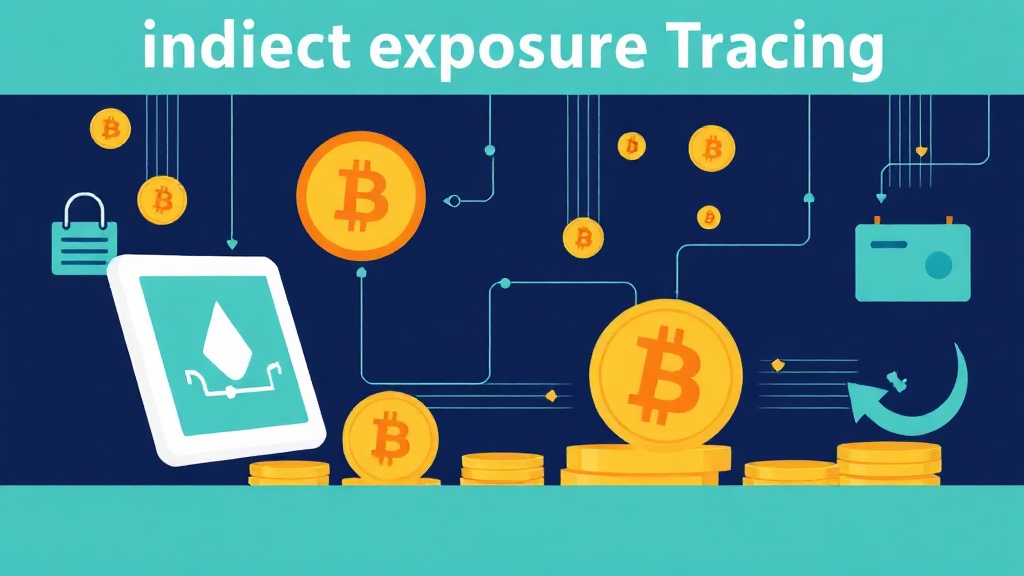
Understanding Indirect Exposure Tracing in Cryptocurrency
Indirect exposure tracing is a sophisticated method used to uncover hidden connections between cryptocurrency transactions, even when users attempt to maintain privacy. Unlike direct tracing, which follows a clear transaction path, indirect exposure tracing leverages blockchain analysis tools to identify patterns, relationships, and exposures that aren’t immediately visible. This technique is particularly relevant in the world of cryptocurrency, where privacy coins and mixing services are often employed to obscure transaction trails.
At its core, indirect exposure tracing relies on heuristics and clustering algorithms to group addresses that likely belong to the same user or entity. For example, if multiple addresses are used to send funds to a single exchange wallet, they may be linked, revealing a user’s broader transaction history. This method is widely used by blockchain analytics firms, law enforcement, and even cybercriminals to deanonymize users.
The rise of privacy-focused cryptocurrencies like Monero and Zcash has intensified the cat-and-mouse game between privacy advocates and those seeking to trace transactions. However, even these coins are not entirely immune to indirect exposure tracing, as side-channel attacks and metadata analysis can sometimes reveal critical information.
How Indirect Exposure Tracing Works: Techniques and Tools
Indirect exposure tracing operates through several key techniques, each designed to uncover hidden connections in blockchain data. One of the most common methods is address clustering, where blockchain analysts group addresses that are likely controlled by the same user. This is often done by identifying "peeling chains"—a pattern where a large amount of cryptocurrency is sent to a new address, which then sends smaller amounts to other addresses. By following these chains, analysts can infer ownership.
Another powerful tool is transaction graph analysis, which maps out the flow of funds across the blockchain. By analyzing the timing, amounts, and frequency of transactions, analysts can identify patterns that suggest a relationship between addresses. For instance, if two addresses frequently send funds to the same third address, they may be linked to the same user or service.
Additionally, metadata analysis plays a crucial role in indirect exposure tracing. While blockchain data is public, metadata such as IP addresses, timestamps, and wallet fingerprints can provide clues about a user’s identity. For example, if a user accesses a cryptocurrency wallet from the same IP address multiple times, it may be possible to link those transactions to a specific individual.
Several tools and services specialize in indirect exposure tracing, including Chainalysis, CipherTrace, and Elliptic. These platforms use advanced algorithms to analyze blockchain data and provide insights into transaction flows, often used by financial institutions and regulators to comply with anti-money laundering (AML) laws.
Real-World Examples of Indirect Exposure Tracing
Indirect exposure tracing has been used in numerous high-profile cases to uncover illicit activities and deanonymize cryptocurrency users. One notable example is the takedown of the Silk Road marketplace, where law enforcement agencies used blockchain analysis to trace Bitcoin transactions back to the marketplace’s operators. By analyzing transaction patterns and clustering addresses, authorities were able to identify key figures behind the operation.
Another example is the Twitter Bitcoin scam of 2020, where hackers compromised high-profile accounts to promote a Bitcoin giveaway scam. Blockchain analysts used indirect exposure tracing to track the flow of stolen funds through multiple addresses and exchanges, ultimately identifying some of the perpetrators. This case highlighted the effectiveness of blockchain analysis in tracing funds, even when criminals attempted to obscure their tracks.
Privacy coins like Monero have also faced challenges with indirect exposure tracing. In 2020, a study by researchers at MIT demonstrated that it was possible to deanonymize Monero transactions by analyzing transaction timing and amounts. While Monero was designed to obscure transaction details, the study showed that metadata and side-channel attacks could still reveal critical information.
These examples underscore the importance of understanding indirect exposure tracing for anyone involved in cryptocurrency, whether as a user, investor, or developer. By recognizing how these techniques work, individuals can take steps to better protect their privacy.
Protecting Your Cryptocurrency Privacy: Practical Tips
While indirect exposure tracing poses significant challenges to cryptocurrency privacy, there are several strategies users can employ to mitigate risks. Here are some practical tips to enhance your privacy:
- Use Privacy Coins Wisely: While privacy coins like Monero and Zcash offer enhanced anonymity, they are not foolproof. Avoid using them for all transactions, and consider mixing them with other cryptocurrencies to obscure their origin.
- Avoid Reusing Addresses: Generating a new address for each transaction can help prevent address clustering. This makes it harder for analysts to link your transactions together.
- Use Coin Mixing Services: Services like CoinJoin (used by Wasabi Wallet) or Tornado Cash can help obscure the trail of your cryptocurrency by mixing it with other users’ funds. However, be cautious when choosing a mixing service, as some may log your data or be compromised.
- Leverage VPNs and Tor: Using a virtual private network (VPN) or the Tor network can help mask your IP address, making it harder for analysts to link your transactions to your identity. However, be aware that some VPN providers may log your data, so choose a reputable, no-logs provider.
- Be Mindful of Metadata: Avoid sharing unnecessary metadata, such as transaction timestamps or wallet fingerprints. This information can be used to infer relationships between addresses and deanonymize your transactions.
- Use Decentralized Exchanges (DEXs): DEXs like Uniswap or Bisq allow you to trade cryptocurrencies without relying on centralized exchanges, which may share data with blockchain analytics firms. However, be aware that DEXs may still be subject to indirect exposure tracing.
- Stay Updated on Privacy Tools: The cryptocurrency privacy landscape is constantly evolving, with new tools and techniques emerging all the time. Stay informed about the latest developments in privacy-enhancing technologies to better protect your funds.
Future of Indirect Exposure Tracing: Challenges and Opportunities
The future of indirect exposure tracing presents both challenges and opportunities for the cryptocurrency community. On one hand, advances in blockchain analysis and machine learning are making it increasingly difficult for users to maintain privacy. Governments and regulators are also pushing for greater transparency, with some jurisdictions requiring cryptocurrency exchanges to implement strict AML and know-your-customer (KYC) policies.
On the other hand, the rise of decentralized finance (DeFi) and privacy-focused technologies is creating new opportunities for users to regain control over their financial privacy. Projects like Aztec Protocol and Secret Network are exploring ways to enable private transactions on public blockchains, while decentralized identity solutions are being developed to give users more control over their data.
However, the battle between privacy advocates and those seeking to trace transactions is far from over. As blockchain technology continues to evolve, so too will the techniques used for indirect exposure tracing. Users must remain vigilant and proactive in protecting their privacy, while developers must continue to innovate in the realm of privacy-enhancing technologies.
Ultimately, the future of cryptocurrency privacy will depend on a delicate balance between transparency and anonymity. As regulators, developers, and users grapple with this challenge, it is clear that indirect exposure tracing will remain a critical tool in the fight against illicit activities—and a persistent threat to financial privacy.
Related articles

Understanding Counterparty Risk in Cryptocurrency Investments

Unlock Financial Insights with Spending Pattern Analysis

Understanding Address Behavioral Profiling in Cryptocurrency Privacy

How Entity Resolution on Blockchain Enhances Transparency and Privacy

Understanding Knowledge Graph Attribution for Better Data Insights
Looking for a privacy tool?
Browse every mixer, exchanger and Telegram bot in one place.