Isogeny-Based Cryptography: Securing the Future of Cryptocurrency Privacy
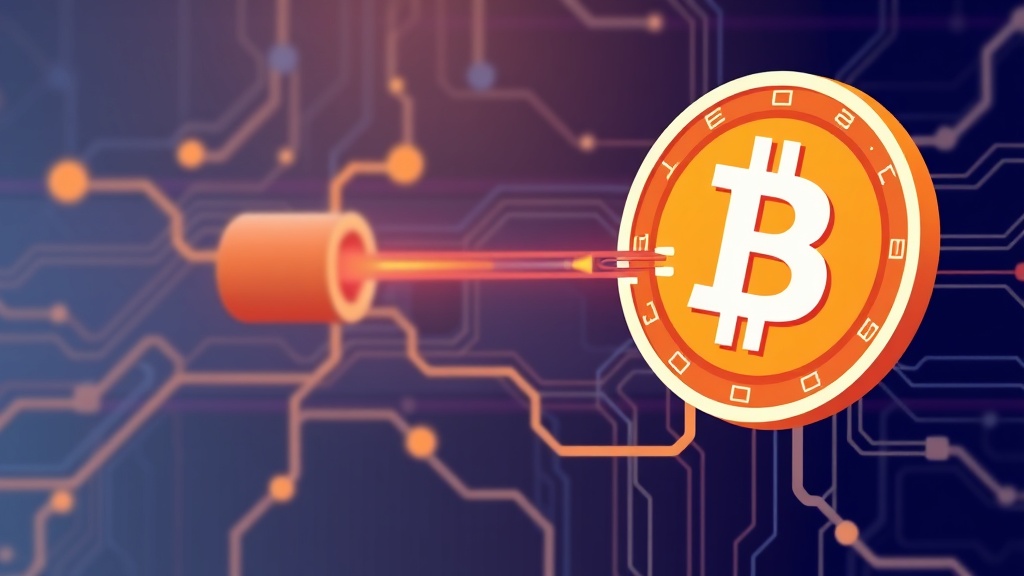
What Is Isogeny-Based Cryptography?
Isogeny-based cryptography is a cutting-edge approach to secure communication that leverages the mathematical properties of elliptic curves. Unlike traditional cryptographic methods, which rely on problems like factoring large numbers or solving discrete logarithms, isogeny-based systems use the difficulty of computing isogenies—mathematical transformations between elliptic curves—as their foundation. This makes them highly resistant to quantum computing attacks, a growing concern for modern cryptocurrency systems.
Why Isogenies Matter in Cryptocurrency
Cryptocurrencies like Monero and Zcash already prioritize privacy, but quantum computing threatens to undermine their security. Isogeny-based cryptography offers a quantum-resistant alternative, ensuring that transactions remain confidential even as computational power advances. By integrating isogenies into blockchain protocols, developers can future-proof privacy features against emerging threats.
How Isogeny-Based Cryptography Works
The core of isogeny-based systems lies in the hidden structure of isogenies. For example, the Supersingular Isogeny Diffie-Hellman (SIDH) protocol enables secure key exchange by exploiting the difficulty of distinguishing between isogenous and non-isogenous curves. This process creates a shared secret key without exposing sensitive data, making it ideal for private transactions.
Advantages Over Traditional Methods
Isogeny-based cryptography outperforms classical systems in several ways:
- Quantum Resistance: Immune to Shor's algorithm, which breaks RSA and ECC.
- Efficiency: Faster key generation and smaller key sizes compared to lattice-based methods.
- Post-Quantum Security: Aligns with NIST's post-quantum cryptography standards.
Challenges and Limitations
Despite its promise, isogeny-based cryptography faces hurdles. Implementation complexity and potential vulnerabilities in certain isogeny types (e.g., SIDH's recent attacks) require rigorous testing. Additionally, adoption in existing blockchain networks demands significant updates to consensus mechanisms and wallet infrastructure.
Practical Tips for Cryptocurrency Users
- Stay Informed: Follow updates from projects like Isogeny Labs or Quantum Resistant Ledger (QRL).
- Use Quantum-Resistant Wallets: Explore wallets integrating isogeny-based protocols for enhanced privacy.
- Support Research: Advocate for open-source development and peer-reviewed standards in post-quantum cryptography.
Conclusion
Isogeny-based cryptography represents a pivotal step toward securing the future of cryptocurrency privacy. As quantum computing looms, its ability to provide robust, efficient, and future-proof security makes it a cornerstone of next-generation blockchain innovation. By embracing this technology, the crypto community can safeguard user anonymity and transaction integrity in an increasingly digital world.
Related articles

Post-Quantum Privacy: Securing Crypto in the Quantum Era
Ring LWE Encryption: Securing Cryptocurrency Transactions with Advanced Cryptography
Mastering Crypto Privacy: Learning Through Mistakes
Lattice-Based Cryptography: The Future of Secure Digital Transactions

Proxy Re-Encryption: Boosting Crypto Privacy
Looking for a privacy tool?
Browse every mixer, exchanger and Telegram bot in one place.