Mastering Recursive Snark Composition for Enhanced Cryptocurrency Privacy
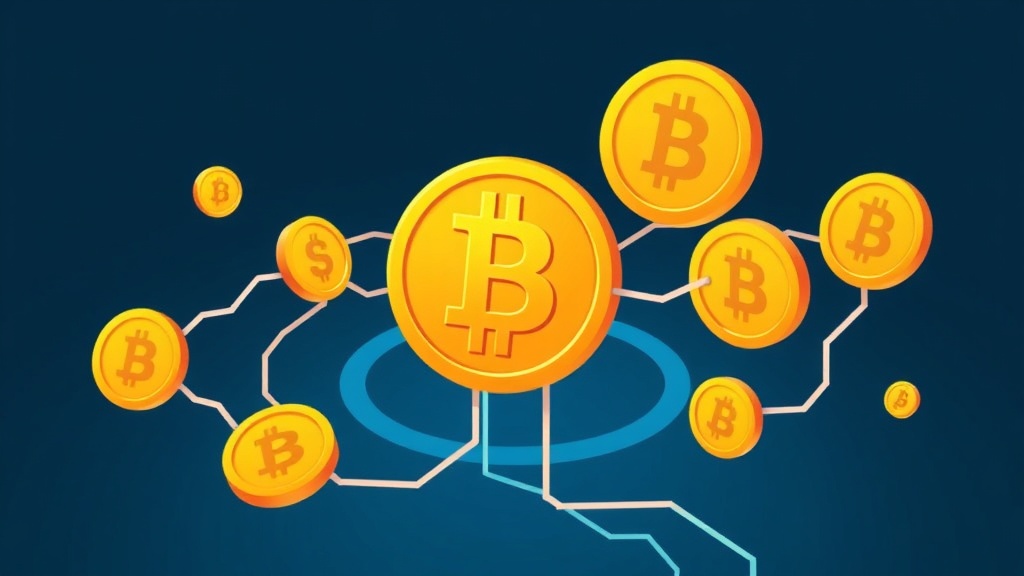
Understanding Recursive Snark Composition in Cryptocurrency
Recursive snark composition is a groundbreaking technique in the world of cryptocurrency privacy, particularly within zero-knowledge proof systems. At its core, it allows for the aggregation of multiple proofs into a single, verifiable proof. This innovation is pivotal for enhancing scalability and privacy in blockchain networks. By compressing numerous transactions or smart contract executions into one succinct proof, recursive snark composition significantly reduces the computational burden on validators and nodes. For privacy-focused cryptocurrencies like Zcash or Ethereum’s privacy-centric solutions, this method ensures that transaction details remain confidential while maintaining the integrity of the network.
The concept of recursive in this context refers to the ability of a proof to verify another proof, creating a chain or tree of verifications. This recursive nature enables the composition of multiple layers of proofs, making it possible to handle complex transactions or even entire blocks in a single proof. The result? Enhanced efficiency, lower transaction costs, and robust privacy guarantees that are essential for the next generation of decentralized applications (dApps).
Why Recursive Snark Composition Matters for Privacy
Privacy is a cornerstone of cryptocurrency adoption, and recursive snark composition is a game-changer in this arena. Traditional blockchain systems, while transparent, often sacrifice user privacy for auditability. Recursive snarks, however, strike a balance by allowing transactions to be verified without revealing sensitive information. This is achieved through zero-knowledge succinct non-interactive arguments of knowledge (zk-SNARKs), which enable one party to prove possession of certain information without actually revealing that information.
For privacy-focused cryptocurrencies, recursive snark composition offers several key advantages:
- Enhanced Scalability: By aggregating multiple proofs into one, recursive snarks reduce the amount of data that needs to be stored and verified on-chain. This alleviates congestion and lowers transaction fees.
- Improved Privacy: Users can transact with confidence, knowing that their transaction details—such as sender, receiver, and amount—are kept confidential. This is particularly important in industries where financial privacy is critical, such as healthcare or enterprise supply chains.
- Lower Computational Overhead: Validators and nodes no longer need to process each transaction individually. Instead, they verify a single recursive proof, which drastically reduces computational requirements and energy consumption.
- Interoperability: Recursive snark composition can be integrated into cross-chain protocols, enabling seamless privacy-preserving transactions across different blockchain networks.
The implications for decentralized finance (DeFi) and privacy-centric applications are profound. Imagine a world where users can engage in lending, borrowing, or trading without exposing their financial history or identity. Recursive snark composition makes this vision a reality.
How Recursive Snark Composition Works: A Technical Deep Dive
To fully grasp the power of recursive snark composition, it’s essential to understand its underlying mechanics. At the heart of this technique are zero-knowledge proofs (ZKPs), specifically zk-SNARKs. These proofs allow a prover to convince a verifier that a statement is true without revealing any additional information. The recursive aspect comes into play when these proofs are composed or nested within one another.
The process typically involves the following steps:
- Proof Generation: A prover generates a zk-SNARK for a specific computation or transaction. This proof attests to the validity of the computation without disclosing the inputs or intermediate steps.
- Recursive Composition: The generated proof is then used as an input to generate another zk-SNARK. This new proof verifies the correctness of the previous proof, effectively nesting the two proofs together. This process can be repeated multiple times, creating a chain or tree of proofs.
- Verification: A verifier can then check the final composed proof to ensure that all nested proofs are valid. This single verification step confirms the correctness of the entire chain of computations or transactions.
- On-Chain Submission: The composed proof is submitted to the blockchain, where it is verified by nodes. Since the proof is succinct, the verification process is quick and efficient, regardless of the complexity of the underlying transactions.
This recursive composition is made possible by advanced cryptographic techniques, including elliptic curve pairings and homomorphic encryption. These tools ensure that the proofs remain secure and tamper-proof, even when composed recursively. Projects like Mina Protocol and Aleph Zero are pioneering the use of recursive snark composition to build scalable, privacy-preserving blockchains.
Practical Applications and Use Cases
Recursive snark composition is not just a theoretical concept—it has real-world applications that are already transforming the cryptocurrency landscape. Here are some of the most promising use cases:
Privacy-Preserving Transactions
Cryptocurrencies like Zcash have long leveraged zk-SNARKs to enable private transactions. However, recursive snark composition takes this a step further by allowing users to batch multiple transactions into a single proof. This reduces the on-chain footprint while maintaining privacy. For example, a user could consolidate several payments into one recursive proof, making it nearly impossible to trace individual transactions.
Scalable Smart Contracts
Smart contracts on platforms like Ethereum often suffer from high gas fees and slow transaction speeds. Recursive snark composition can alleviate these issues by aggregating multiple contract executions into a single proof. This is particularly useful for decentralized applications (dApps) that require frequent interactions, such as decentralized exchanges (DEXs) or gaming platforms. By reducing the number of on-chain operations, recursive snarks enable faster and cheaper transactions.
Cross-Chain Privacy Solutions
Interoperability is a major challenge in the blockchain ecosystem. Recursive snark composition can bridge this gap by enabling privacy-preserving transactions across different blockchains. For instance, a user could transfer assets from Ethereum to Polkadot while keeping the transaction details confidential. This opens up new possibilities for decentralized finance (DeFi) and cross-chain asset management.
Enterprise and Institutional Use
Institutions and enterprises often require privacy for their financial transactions. Recursive snark composition provides a solution by allowing them to conduct confidential transactions on public blockchains. This is particularly valuable for supply chain management, where companies need to verify the authenticity of goods without exposing sensitive business relationships.
Step-by-Step Guide to Implementing Recursive Snark Composition
If you're a developer or cryptocurrency enthusiast looking to implement recursive snark composition, here’s a practical guide to get you started:
Step 1: Choose a Zero-Knowledge Proof System
Start by selecting a zk-SNARK library or framework that supports recursive composition. Popular options include:
- libsnark: A C++ library for zk-SNARKs that supports recursive proofs.
- ZoKrates: A toolbox for zk-SNARKs on Ethereum, which can be extended for recursive composition.
- Mina Protocol’s SnarkyJS: A JavaScript library designed for Mina’s recursive zk-SNARKs.
Step 2: Design Your Proof Circuit
Define the computation or transaction you want to prove. This involves creating a circuit that represents the logic of your application. For example, if you’re building a privacy-preserving transaction system, your circuit might include inputs for sender, receiver, and amount, along with constraints to ensure the transaction is valid.
Step 3: Generate the Initial Proof
Use your chosen zk-SNARK library to generate the initial proof for your circuit. This proof will attest to the validity of your computation without revealing any sensitive information. For recursive composition, ensure that your proof system supports nested proofs.
Step 4: Compose the Proof Recursively
Take the generated proof and use it as an input to generate another proof. This new proof will verify the correctness of the previous proof. Repeat this process as many times as needed to achieve the desired level of composition. Each recursive step should maintain the integrity and security of the proof.
Step 5: Verify the Composed Proof
Before submitting the proof to the blockchain, verify it locally to ensure it’s correct. This step is crucial to avoid wasting gas fees or on-chain resources. Use the verification key generated during the proof setup phase to check the composed proof.
Step 6: Deploy to the Blockchain
Once verified, submit the composed proof to the blockchain. Nodes will verify the proof, and if valid, it will be added to the blockchain. The recursive nature of the proof ensures that all nested computations are confirmed in a single verification step.
Step 7: Monitor and Optimize
After deployment, monitor the performance of your recursive snark composition system. Look for bottlenecks or inefficiencies, such as high computational costs or slow verification times. Optimize your circuits and proof generation processes as needed to improve scalability and user experience.
Challenges and Considerations
While recursive snark composition offers significant benefits, it’s not without its challenges. Developers and users should be aware of the following considerations:
Computational Complexity
Generating and verifying recursive snarks can be computationally intensive, especially for complex applications. This may require significant hardware resources, which could be a barrier for smaller projects or individual developers. Optimizing proof circuits and using efficient cryptographic libraries can help mitigate this issue.
Security Risks
Recursive snark composition introduces additional layers of complexity, which can potentially introduce security vulnerabilities. It’s essential to thoroughly audit your proof systems and use well-tested cryptographic primitives. Collaborate with the broader zero-knowledge community to identify and address potential risks.
Adoption and Interoperability
As a relatively new technology, recursive snark composition is still gaining traction in the blockchain ecosystem. Ensuring interoperability with existing systems and protocols can be challenging. Developers should prioritize compatibility with popular blockchain platforms and privacy solutions to drive adoption.
Regulatory Uncertainty
Privacy-enhancing technologies like recursive snark composition may face regulatory scrutiny, particularly in regions with strict financial privacy laws. It’s important to stay informed about evolving regulations and ensure compliance with local laws.
Future of Recursive Snark Composition in Cryptocurrency
The future of recursive snark composition is bright, with ongoing research and development poised to unlock even greater potential. Here are some trends and advancements to watch:
Improved Proof Systems
New zk-SNARK variants, such as zk-STARKs and Bulletproofs, are being developed to address some of the limitations of traditional zk-SNARKs. These systems offer improved security, transparency, and efficiency, making them ideal candidates for recursive composition. Projects like Polygon Hermez and StarkWare are at the forefront of this innovation.
Hybrid Privacy Solutions
Combining recursive snark composition with other privacy techniques, such as ring signatures or stealth addresses, can create even more robust privacy solutions. These hybrid approaches offer multiple layers of protection, making it even harder to trace transactions or identify users.
Decentralized Identity and Authentication
Recursive snark composition can be integrated with decentralized identity solutions to enable privacy-preserving authentication. Users could prove their identity or credentials without revealing personal information, opening up new possibilities for secure and private access to services.
Scalability Solutions for Layer 2
Layer 2 scaling solutions, such as zk-Rollups and Optimistic Rollups, are already leveraging zk-SNARKs to improve scalability. Recursive snark composition can enhance these solutions by enabling even greater compression of transactions and proofs. This could lead to near-instantaneous transactions with minimal fees, paving the way for mass adoption of cryptocurrencies.
Conclusion: Embracing the Future of Privacy with Recursive Snark Composition
Recursive snark composition represents a paradigm shift in cryptocurrency privacy and scalability. By enabling the aggregation of multiple proofs into a single, verifiable proof, this technique offers a powerful solution to the challenges of transparency and efficiency in blockchain networks. For privacy-focused cryptocurrencies and decentralized applications, recursive snark composition is not just an innovation—it’s a necessity.
As the technology matures, we can expect to see broader adoption across the blockchain ecosystem. Developers, investors, and users alike should stay informed about the latest advancements in recursive snark composition to capitalize on its potential. Whether you're building the next generation of privacy-preserving dApps or simply looking to enhance the security of your transactions, recursive snark composition is a tool worth mastering.
In the ever-evolving world of cryptocurrency, privacy and scalability are not mutually exclusive. With recursive snark composition, you can have both—ushering in a new era of secure, efficient, and private digital transactions.
Related articles

Zero-Knowledge Circuit Design: Building Private Blockchain Solutions
Understanding Halo2 Recursive Proofs in Cryptocurrency Privacy

Bulletproofs Aggregation: Enhancing Privacy in Cryptocurrency Transactions

Plonk Universal Setup: The Future of ZK-SNARK Privacy in Crypto

Groth16: The Powerful Zero-Knowledge Proof System Explained
Looking for a privacy tool?
Browse every mixer, exchanger and Telegram bot in one place.