Merkle Tree Accumulators: The Backbone of Secure Cryptocurrency Privacy
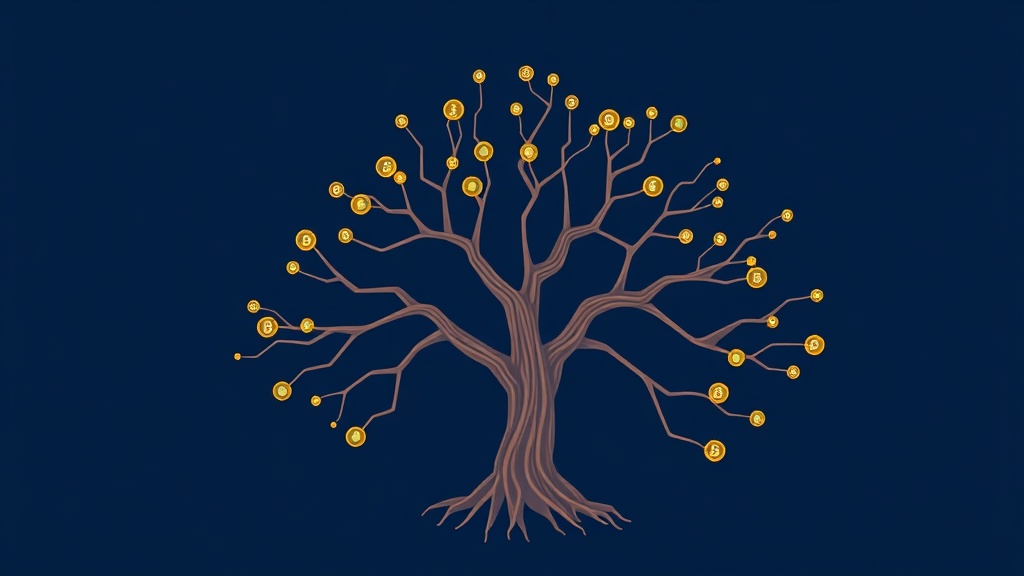
What Is a Merkle Tree Accumulator and Why Does It Matter?
A Merkle Tree Accumulator is a cryptographic data structure that enables efficient and secure verification of large datasets without revealing the entire dataset. Originally developed by Ralph Merkle in 1979, this structure has become foundational in blockchain technology, particularly in privacy-focused cryptocurrencies like Zcash and Monero. By using hash functions to create a single root hash, Merkle Tree Accumulators allow users to prove that a specific piece of data exists in a set without exposing the data itself—this is crucial for privacy in decentralized systems.
In the context of cryptocurrency, Merkle Tree Accumulators help maintain transaction integrity while preserving user anonymity. They enable lightweight clients (like mobile wallets) to verify transactions without downloading the entire blockchain, reducing storage and bandwidth demands. This balance between efficiency and privacy makes Merkle Tree Accumulators a cornerstone of modern cryptographic systems.
How Does a Merkle Tree Accumulator Work? A Step-by-Step Breakdown
A Merkle Tree Accumulator operates through a hierarchical structure of hash functions. Here’s how it works:
- Leaf Nodes: Each piece of data (e.g., a transaction in a blockchain) is hashed individually to create a leaf node. For example, in Bitcoin, each transaction is hashed using SHA-256.
- Pairing and Hashing: Leaf nodes are paired, and their hashes are concatenated and hashed again to form parent nodes. This process repeats until only one hash remains—the Merkle root.
- Verification: To verify a specific transaction, a user only needs the Merkle root, the transaction, and the path (or "proof") from the transaction to the root. This path consists of sibling hashes along the route.
- Efficiency: The Merkle proof allows verification in logarithmic time relative to the number of transactions, making it highly scalable even for large datasets.
For instance, in Zcash’s zk-SNARKs implementation, Merkle Tree Accumulators are used to prove transaction validity without disclosing sender, receiver, or amount—demonstrating their power in privacy-preserving cryptocurrencies.
Merkle Tree Accumulators in Privacy-Focused Cryptocurrencies
Privacy coins like Zcash and Monero leverage Merkle Tree Accumulators to enhance anonymity and security. Here’s how they apply this technology:
- Zcash: Uses a Merkle Tree Accumulator in its zk-SNARKs protocol to validate transactions without revealing details. The accumulator ensures that a transaction exists in the blockchain while keeping the data private.
- Monero: Implements a variant called the Merkle Tree in its Ring Confidential Transactions (RingCT) to obscure transaction origins and destinations. The accumulator helps verify transaction inclusion without exposing individual inputs.
- Grin and Beam: These Mimblewimble-based cryptocurrencies use Merkle proofs to validate transactions while maintaining compact blockchain sizes and strong privacy guarantees.
These implementations highlight how Merkle Tree Accumulators enable cryptocurrencies to balance transparency (for network security) with privacy (for user anonymity). Without such structures, verifying transactions in a privacy coin would require revealing sensitive data, undermining the purpose of the technology.
Advantages and Limitations of Merkle Tree Accumulators
Merkle Tree Accumulators offer several key benefits, but they also come with challenges. Understanding both sides is essential for developers and users alike.
Advantages:
- Efficiency: Verification requires only a small proof (the Merkle path), not the entire dataset. This reduces computational and storage overhead.
- Scalability: Lightweight clients can operate without downloading full blockchain data, making cryptocurrencies more accessible on low-resource devices.
- Security: Tampering with any part of the tree changes the Merkle root, making it easy to detect fraud or corruption.
- Privacy: Users can prove data inclusion without revealing the data itself, a critical feature for privacy-focused applications.
Limitations:
- Dynamic Updates: Traditional Merkle Trees are not efficient for frequent updates (e.g., adding or removing leaves). This is where dynamic Merkle Tree Accumulators (like RSA accumulators) come in, but they introduce complexity.
- Storage Overhead: While proofs are small, maintaining the full tree structure can still require significant storage for large datasets.
- Hash Function Dependence: The security of the accumulator relies on the cryptographic strength of the hash function. Weaknesses in SHA-256 or other hashes could compromise the system.
These trade-offs are why ongoing research focuses on improving accumulator designs, such as using elliptic curve cryptography or post-quantum secure algorithms.
Practical Tips for Using Merkle Tree Accumulators in Cryptocurrency Projects
If you're developing a privacy-focused cryptocurrency or integrating Merkle Tree Accumulators into your project, consider the following best practices:
- Choose the Right Hash Function: Use cryptographically secure and widely vetted hash functions like SHA-256, Keccak-256, or BLAKE3. Avoid custom or untested algorithms.
- Optimize for Dynamic Updates: If your application requires frequent additions or deletions (e.g., a privacy coin with many transactions), consider dynamic accumulators like RSA or bilinear-map accumulators.
- Implement Efficient Proof Generation: Ensure your Merkle proof generation is optimized for speed and minimal storage. Libraries like
libsnarkorlibsecp256k1can help. - Test for Edge Cases: Verify your accumulator handles edge cases like empty trees, single-leaf trees, or rapid updates without errors.
- Combine with Zero-Knowledge Proofs: For maximum privacy, pair Merkle Tree Accumulators with zk-SNARKs or zk-STARKs (as seen in Zcash or StarkWare projects).
- Monitor Cryptographic Advances: Stay updated on quantum computing threats and post-quantum cryptography to future-proof your accumulator.
Future of Merkle Tree Accumulators: Trends and Innovations
The evolution of Merkle Tree Accumulators is closely tied to advancements in cryptography and blockchain technology. Several trends are shaping their future:
- Post-Quantum Secure Accumulators: Researchers are developing accumulators resistant to quantum attacks, such as those based on lattice cryptography or hash-based signatures.
- Hybrid Privacy Models: Combining Merkle Tree Accumulators with other privacy techniques (e.g., confidential transactions, stealth addresses) is becoming more common in next-gen blockchains.
- Layer-2 Scalability: Merkle proofs are integral to Layer-2 solutions like rollups (e.g., Optimistic Rollups, zk-Rollups), where they enable off-chain computation with on-chain verification.
- Interoperability: Projects like Polkadot and Cosmos are exploring cross-chain Merkle proofs to enhance scalability and privacy across multiple blockchains.
As privacy concerns grow and blockchain adoption expands, Merkle Tree Accumulators will remain a vital tool for secure, efficient, and confidential transactions. Their adaptability ensures they’ll continue to evolve alongside the cryptographic landscape.
Conclusion: Why Merkle Tree Accumulators Are Indispensable
Merkle Tree Accumulators are more than just a technical curiosity—they are the backbone of privacy and efficiency in modern cryptocurrencies. By enabling secure, scalable, and private verification of transactions, they strike a balance between transparency and anonymity that is essential for decentralized systems. Whether you're a developer building the next privacy coin, a user concerned about financial privacy, or simply a cryptocurrency enthusiast, understanding Merkle Tree Accumulators gives you insight into how blockchain technology achieves both security and confidentiality.
As cryptographic research advances, these structures will only become more robust and versatile. For now, they remain a testament to the power of combining mathematical elegance with real-world utility—a true cornerstone of blockchain innovation.
Related articles

Jubjub Elliptic Curve: The Backbone of ZK-SNARKs in Privacy Coins

From Sprout to Sapling: A Guide to Cryptocurrency Privacy Evolution
Zcash Halo Arc: The Next-Gen Privacy Revolution in Crypto

Zcash Sapling: The Future of Private Cryptocurrency Transactions

Understanding Sigma Protocol in Firo: Enhanced Privacy for Cryptocurrency
Looking for a privacy tool?
Browse every mixer, exchanger and Telegram bot in one place.