Understanding CoinJoin Subtransaction Linking Risks and Solutions
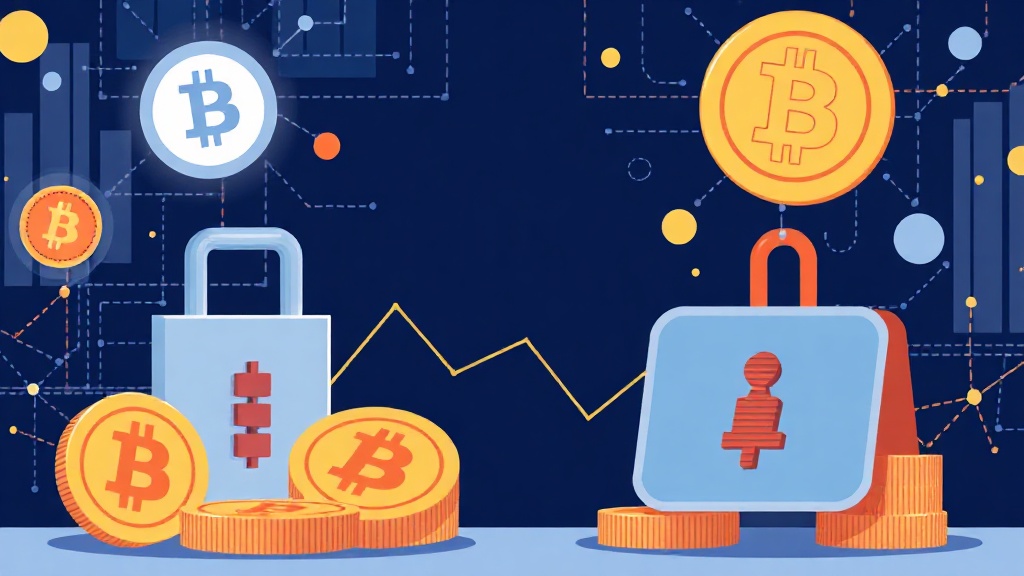
What Is CoinJoin and Why Does Subtransaction Linking Matter?
CoinJoin is a privacy-enhancing technique used in cryptocurrencies like Bitcoin to mix transactions from multiple users, making it harder to trace the origin and destination of funds. By combining inputs and outputs from different participants, CoinJoin creates a single transaction that obscures individual payment trails. However, even within a CoinJoin transaction, subtransaction linking can occur, potentially compromising privacy.
Subtransaction linking refers to the ability of an observer to associate specific inputs (coins) with outputs (recipients) within a CoinJoin transaction. This happens when the amounts being mixed are not uniform or when certain patterns emerge that allow analysts to deduce which input likely corresponds to which output. Understanding this risk is crucial for users who prioritize financial privacy in their cryptocurrency transactions.
How Subtransaction Linking Works in CoinJoin Transactions
CoinJoin transactions are not always perfectly private. The way inputs and outputs are structured can inadvertently reveal connections. For example, if one participant contributes a unique amount that no one else uses, an outside observer can trace that specific input to its corresponding output. This is especially true in non-denominational CoinJoin, where users can choose arbitrary amounts rather than fixed denominations.
Another common issue arises from change addresses. When a user receives change back after a CoinJoin, the change output is linked to the user’s original input. If the change amount is unique or the user’s wallet behavior is predictable, this can be used to deanonymize the transaction. Privacy-focused wallets and services like Wasabi Wallet and Samourai Wallet address this by using equal-output CoinJoin and carefully managing change outputs to minimize linking risks.
Real-World Examples of Subtransaction Linking Vulnerabilities
Several high-profile cases have demonstrated how subtransaction linking can undermine CoinJoin privacy. In 2019, researchers analyzed transactions from a popular mixing service and found that by examining the timing and amounts of inputs and outputs, they could statistically link over 80% of transactions to their original senders. This was possible because many users did not use fixed denominations or equal amounts, making their transactions stand out.
Another example involves the use of coin control features in wallets. Users who manually select inputs for CoinJoin may inadvertently create identifiable patterns. For instance, if a user always combines small inputs with large ones, an observer can correlate these patterns across multiple transactions, gradually piecing together the user’s spending habits.
These examples highlight the importance of using CoinJoin services that enforce uniform transaction structures and discourage custom input selection. Services like JoinMarket and Wasabi Wallet implement algorithms to randomize input selection and output distribution, reducing the likelihood of subtransaction linking.
Best Practices to Avoid Subtransaction Linking in CoinJoin
To maximize privacy when using CoinJoin, follow these practical tips:
- Use fixed denominations: Participate in CoinJoin transactions that require equal input amounts. This makes it impossible to distinguish one input from another, as all inputs and outputs are identical in value.
- Avoid custom amounts: Do not manually select arbitrary amounts for CoinJoin. Stick to the predefined denominations offered by your wallet or service to prevent unique identifiers in the transaction.
- Manage change addresses carefully: If your wallet returns change, ensure it is sent to a new address that is not linked to your identity. Some wallets automatically handle this by using stealth change or sending change to a fresh address in your wallet.
- Use privacy-focused wallets: Wallets like Wasabi Wallet, Samourai Wallet, and Sparrow Wallet are designed with CoinJoin in mind. They implement features such as Ricochet (Samourai) or Chaumian CoinJoin (Wasabi) to further obfuscate transaction trails.
- Avoid reusing addresses: Never reuse Bitcoin addresses for receiving funds. Always generate a new address for each transaction to prevent linking your identity to multiple transactions.
- Consider using multiple mixers: For enhanced privacy, use multiple CoinJoin services in succession. This creates additional layers of obfuscation, making it harder for observers to trace your funds.
- Wait for sufficient confirmations: After a CoinJoin transaction, wait for several confirmations before spending the mixed coins. This reduces the risk of timing analysis, where an observer might correlate your spending patterns with the CoinJoin transaction.
Advanced Techniques to Enhance CoinJoin Privacy
For users who require even greater privacy, advanced techniques can be combined with CoinJoin to further obscure transaction trails. One such technique is payjoin, also known as P2EP (Pay to EndPoint). Payjoin allows the recipient of a payment to contribute their own inputs to the transaction, making it difficult to distinguish between the sender and receiver. This effectively breaks the common-input-ownership heuristic, a key method used in blockchain analysis.
Another advanced method is dusting attacks mitigation. Some privacy-focused wallets automatically filter out dust transactions (tiny amounts sent to your address) to prevent attackers from tracking your wallet activity. By ignoring these small amounts, you reduce the risk of subtransaction linking through artificially created outputs.
Additionally, coin shuffling services and decentralized CoinJoin protocols like JoinMarket allow users to participate in peer-to-peer mixing without relying on a central coordinator. This reduces the risk of a single point of failure or collusion among participants. JoinMarket, in particular, uses a market-based approach where users earn fees by acting as liquidity providers, further decentralizing the mixing process.
Conclusion: Balancing Convenience and Privacy in CoinJoin
CoinJoin is a powerful tool for enhancing cryptocurrency privacy, but it is not foolproof. Subtransaction linking remains a significant risk, particularly when users do not follow best practices or use poorly designed mixing services. By understanding how subtransaction linking works and adopting strategies such as using fixed denominations, managing change addresses, and leveraging privacy-focused wallets, users can significantly improve their transaction privacy.
For those seeking the highest level of privacy, combining CoinJoin with techniques like payjoin, coin shuffling, and avoiding address reuse can create a robust privacy strategy. However, it’s important to remember that no method is 100% effective. The blockchain’s public nature means that determined attackers with sufficient resources may still find ways to analyze transactions. Therefore, users should remain vigilant, stay informed about new privacy tools, and continuously adapt their strategies to stay ahead of evolving threats.
Ultimately, CoinJoin is just one piece of the privacy puzzle. By combining it with other privacy-enhancing practices and maintaining good operational security, cryptocurrency users can take meaningful steps toward achieving true financial anonymity.
Related articles
Anonymity Set Reduction: How It Impacts Crypto Privacy & Security

Anonymity Set Analysis: How to Measure Privacy in Crypto Transactions
Deposit-Withdrawal Linking: How to Keep Your Crypto Transactions Private
Tornado Cash Tracing: How Authorities Track Privacy Mixers in Crypto
How to Detect CoinJoin Transactions in JoinMarket for Better Privacy
Looking for a privacy tool?
Browse every mixer, exchanger and Telegram bot in one place.