Understanding Graph Neural Network Attribution in Crypto Privacy
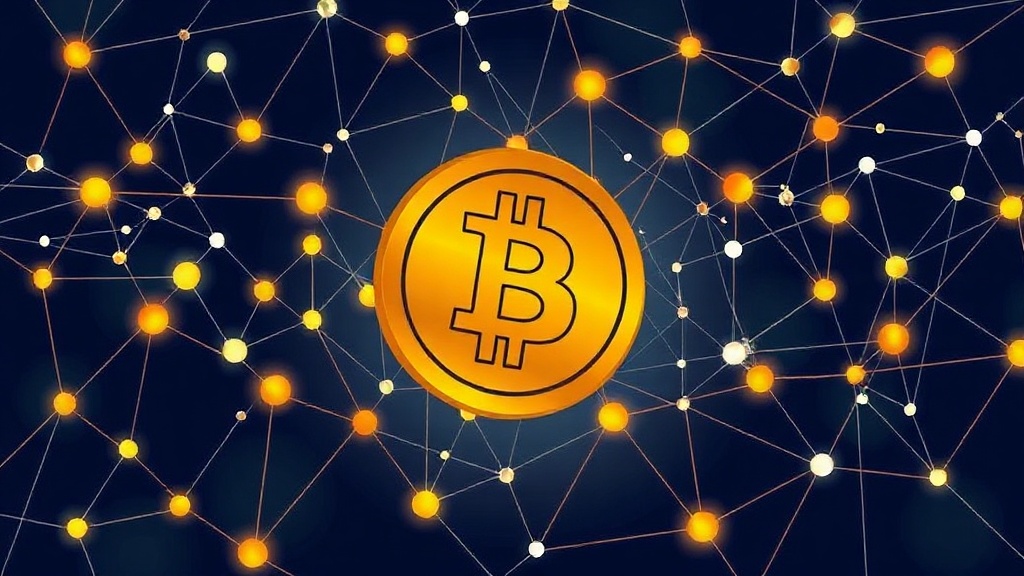
What Is Graph Neural Network Attribution?
Graph Neural Networks (GNNs) are a class of deep learning models designed to process data structured as graphs—nodes connected by edges. In the context of cryptocurrency privacy, GNNs analyze transaction networks where addresses (nodes) are linked by transfers (edges). Graph Neural Network Attribution refers to the process of identifying which nodes or edges in a transaction graph contribute most to a model’s prediction, such as flagging suspicious activity or tracing fund flows.
Unlike traditional machine learning models that treat data as independent samples, GNNs leverage the relational structure of the graph. This makes them particularly powerful for tracking illicit transactions across blockchain networks like Bitcoin or Ethereum, where anonymity is a core feature. Attribution helps analysts and investigators pinpoint key actors or transactions in a network, enhancing transparency without compromising user privacy.
Why Graph Neural Networks Matter in Cryptocurrency Privacy
Cryptocurrencies like Bitcoin operate on public ledgers, meaning all transactions are visible but not necessarily linked to real-world identities. However, sophisticated clustering and pattern recognition techniques can deanonymize users by analyzing transaction graphs. GNNs take this a step further by modeling the entire network’s structure, allowing for more accurate and interpretable attribution.
For privacy-focused projects, understanding GNN attribution is crucial. It helps developers design better privacy-preserving protocols and allows users to assess their exposure to blockchain analysis tools. For regulators and compliance teams, GNN-based attribution provides a data-driven way to identify high-risk transactions while minimizing false positives.
How Graph Neural Network Attribution Works
GNN attribution typically involves several key steps:
- Graph Construction: Transactions are represented as a graph where addresses are nodes and transfers are edges. Metadata like timestamps and amounts can be included as node or edge features.
- Model Training: A GNN (e.g., Graph Convolutional Network or Graph Attention Network) is trained on labeled data—such as known illicit addresses—to learn patterns associated with suspicious behavior.
- Attribution Analysis: After training, attribution methods like gradient-based importance, attention weights, or subgraph sampling are used to highlight which nodes or edges influenced the model’s decision.
- Interpretation: Analysts review the attributed subgraphs to identify key actors, fund flows, or clusters of addresses linked to illicit activity.
For example, if a GNN flags a transaction as high-risk, attribution might reveal that the sender’s address is connected to a known mixer service, or that the funds originated from a darknet market. This granular insight is invaluable for both privacy advocates and law enforcement.
Applications in Cryptocurrency Privacy and Compliance
Graph Neural Network Attribution has several practical applications in the crypto space:
- Anti-Money Laundering (AML): GNNs can detect complex money laundering schemes by identifying layered transactions designed to obscure fund origins.
- Sanctions Compliance: Attribution helps exchanges and institutions screen transactions against sanctioned entities by tracing fund flows through the graph.
- Privacy Protocol Design: Developers of privacy coins (e.g., Monero, Zcash) use GNN attribution to test the robustness of their obfuscation techniques against deanonymization attacks.
- Forensic Investigations: Law enforcement agencies employ GNN-based tools to trace stolen funds, ransomware payments, or darknet market transactions.
One notable example is Chainalysis, which uses graph-based analysis to provide attribution insights to governments and businesses. Their tools help identify the flow of funds across multiple blockchains, even when obfuscation techniques like coin mixing are used.
Challenges and Ethical Considerations
While GNN attribution offers powerful insights, it also presents challenges and ethical dilemmas:
- False Positives: Innocent users may be flagged due to indirect associations (e.g., receiving funds from a tainted address).
- Privacy Risks: Over-reliance on graph analysis could erode financial privacy, especially in jurisdictions with weak privacy protections.
- Adversarial Attacks: Attackers may attempt to manipulate transaction graphs to evade detection, such as by creating decoy transactions or using privacy-enhancing tools.
- Bias in Training Data: If the labeled dataset used to train GNNs is biased (e.g., over-representing certain jurisdictions or types of crime), the model may produce unfair or inaccurate attributions.
To mitigate these issues, practitioners should:
- Use diverse and representative training datasets.
- Implement explainable AI techniques to make attribution results transparent and auditable.
- Balance privacy and compliance by adopting privacy-preserving analytics (e.g., zero-knowledge proofs or federated learning).
- Ensure compliance with data protection regulations like GDPR when handling user data.
Practical Tips for Using GNN Attribution in Crypto
If you’re exploring Graph Neural Network Attribution for cryptocurrency analysis, consider the following tips:
- Start with Open-Source Tools: Libraries like PyTorch Geometric, DGL, or Spektral offer GNN implementations. Tools like BitcoinHeist or Elliptic Dataset provide labeled transaction graphs for experimentation.
- Focus on Explainability: Use attribution methods like GNNExplainer or Integrated Gradients to understand model decisions. This is critical for regulatory compliance and user trust.
- Combine with Other Techniques: GNNs work best when paired with traditional clustering (e.g., address tagging) and heuristics (e.g., change address detection).
- Test Against Adversarial Scenarios: Simulate attacks (e.g., dust transactions, chain-hopping) to evaluate your model’s robustness.
- Stay Updated on Privacy Innovations: Follow developments in zero-knowledge proofs (ZKPs), confidential transactions, and privacy-preserving GNNs to future-proof your approach.
Conclusion
Graph Neural Network Attribution is a game-changer for cryptocurrency privacy and compliance. By leveraging the relational structure of blockchain data, GNNs provide a nuanced and interpretable way to trace funds, identify risks, and enhance transparency. Whether you’re a privacy advocate, developer, or regulator, understanding GNN attribution can help you navigate the complex landscape of digital finance.
As blockchain technology evolves, so too will the tools and techniques for attribution. Staying informed about advancements in GNNs, privacy-preserving analytics, and regulatory trends will be key to balancing transparency and user confidentiality. By adopting responsible and ethical practices, we can ensure that cryptocurrency remains a secure and private medium of exchange for all.
Related articles
Supervised Address Classification: A Guide for Crypto Privacy
Machine Learning Clustering: A Guide for Crypto Privacy Enthusiasts
Behavioral Anomaly Scoring: Detecting Suspicious Crypto Transactions
Anomaly Detection in Blockchain: Safeguarding Crypto Transactions
Detecting Suspicious Activity in Crypto: Protect Your Privacy & Assets
Looking for a privacy tool?
Browse every mixer, exchanger and Telegram bot in one place.