Chain Surveillance Software: How It Tracks Crypto Transactions & How to Stay Private
What Is Chain Surveillance Software and Why Does It Matter?
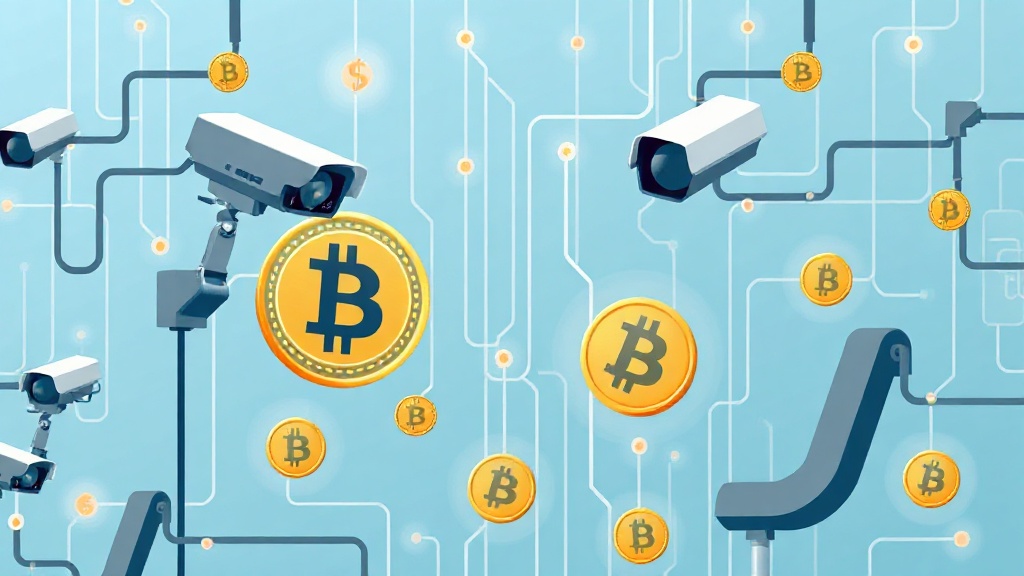
Chain surveillance software refers to specialized tools used by governments, financial institutions, and blockchain analytics firms to monitor and analyze cryptocurrency transactions across public ledgers. These systems track the flow of digital assets, identify suspicious activity, and flag potential money laundering, fraud, or illicit financing. While such tools aim to enhance security and regulatory compliance, they also raise concerns about privacy and financial autonomy in the decentralized world of cryptocurrency.
At its core, chain surveillance relies on blockchain forensics—a process that maps transaction paths, clusters wallet addresses, and links identities to pseudonymous blockchain data. Tools like Chainalysis, TRM Labs, and Elliptic are industry leaders, providing real-time monitoring and risk scoring for thousands of cryptocurrencies, including Bitcoin and Ethereum.
How Chain Surveillance Software Works: The Technology Behind the Tracking
Chain surveillance software operates through a combination of advanced algorithms, machine learning, and data aggregation. Here’s how it functions:
- Address Clustering: Groups multiple wallet addresses believed to belong to the same user or entity by analyzing transaction patterns and shared inputs.
- Transaction Graph Analysis: Maps the flow of funds between wallets, identifying key nodes and suspicious routes (e.g., mixing services, exchanges, or darknet markets).
- Risk Scoring: Assigns risk levels to wallets or transactions based on historical links to illicit activity, geography, or behavior patterns.
- Identity Attribution: Correlates on-chain data with off-chain sources (e.g., exchange KYC records, IP logs, or social media) to deanonymize users.
These systems are particularly effective because blockchains are transparent by design. Every transaction is recorded permanently, allowing surveillance tools to reconstruct financial histories with high accuracy. However, this transparency comes at the cost of user privacy—especially for those who value financial confidentiality.
Why Privacy Advocates Are Concerned About Chain Surveillance
For cryptocurrency enthusiasts and privacy-focused users, chain surveillance represents a growing threat to financial freedom. Here are the key concerns:
- Loss of Anonymity: Even privacy coins like Monero are increasingly scrutinized, and Bitcoin transactions—once thought pseudonymous—can often be traced back to real-world identities.
- Regulatory Overreach: Governments and financial institutions use surveillance data to enforce sanctions, freeze assets, or deny services to individuals without due process.
- Chilling Effect on Adoption: Increased monitoring may discourage legitimate users from engaging with crypto, fearing unjust scrutiny or blacklisting.
- Centralization of Power: Reliance on a few surveillance firms creates a single point of failure and potential abuse, raising questions about accountability and ethics.
Privacy advocates argue that financial surveillance undermines the original promise of cryptocurrency: permissionless, censorship-resistant transactions. As surveillance tools become more sophisticated, the need for privacy-preserving alternatives grows stronger.
How to Protect Your Crypto Transactions from Chain Surveillance
While it’s nearly impossible to achieve perfect anonymity, you can significantly reduce your exposure to chain surveillance using these practical strategies:
Use Privacy-Focused Cryptocurrencies
- Monero (XMR): Uses ring signatures, stealth addresses, and confidential transactions to obscure sender, receiver, and amount.
- Zcash (ZEC): Offers optional privacy via zk-SNARKs, allowing users to shield transaction details.
- Dash (PrivateSend): Mixes transactions with others to break the link between sender and receiver.
Leverage Mixing Services and Tumblers
Mixers like Wasabi Wallet (for Bitcoin) or Tornado Cash (for Ethereum) break transaction trails by pooling funds from multiple users and redistributing them. While effective, be aware that some mixers have faced regulatory scrutiny or shutdowns.
Practice CoinJoin Transactions
CoinJoin is a privacy technique where multiple users combine their transactions into a single batch, making it difficult to link inputs to outputs. Wasabi Wallet and Samourai Wallet offer built-in CoinJoin functionality for Bitcoin users.
Use Decentralized Exchanges (DEXs) and Privacy Wallets
- DEXs like Bisq or THORChain allow peer-to-peer trading without KYC requirements.
- Wallets like Electrum (with CoinJoin) or Samourai prioritize privacy and avoid address reuse.
Minimize Address Reuse and Use New Addresses
Reusing the same Bitcoin address makes it easier for surveillance tools to track your entire transaction history. Always generate a new address for each transaction.
Use VPNs and Tor for Network-Level Privacy
Mask your IP address and obscure your online footprint when interacting with crypto services. Tor (via the Tor Browser) helps prevent tracking of your internet activity.
Future of Chain Surveillance: Trends and Countermeasures
The arms race between surveillance and privacy is intensifying. On one side, regulators are pushing for stricter compliance (e.g., FATF’s Travel Rule), while on the other, privacy advocates are developing new tools and protocols.
Emerging technologies like zero-knowledge proofs (ZKPs) and confidential smart contracts (e.g., in Ethereum’s privacy layers) could redefine privacy in DeFi. Projects like Mina Protocol and Aleph Zero are experimenting with succinct blockchains that minimize data exposure.
Meanwhile, decentralized identity solutions and soulbound tokens may offer ways to prove legitimacy without revealing full transaction histories. As AI becomes more integrated into surveillance, privacy-preserving AI (e.g., federated learning) could help users analyze risk without exposing data.
Ultimately, the future of crypto privacy will depend on a balance between regulation, innovation, and user demand for autonomy. One thing is clear: the more surveillance expands, the more urgent the need for privacy-enhancing technologies becomes.
Final Thoughts: Balancing Privacy and Compliance
Chain surveillance software plays a critical role in combating financial crime, but it also poses significant risks to individual privacy and financial freedom. For crypto users who value anonymity, the best defense is a proactive approach: combine privacy coins, mixing tools, and secure practices to minimize exposure.
Remember, privacy isn’t about hiding illicit activity—it’s about protecting your right to financial autonomy. As blockchain technology evolves, staying informed and adapting your strategies will be key to maintaining control over your digital assets.
Whether you’re a privacy maximalist or simply cautious about surveillance, taking small steps today can help safeguard your financial future in the decentralized world.
Related articles

Blockchain Forensics Firms: How They Track Crypto Transactions

Transaction Risk Scoring: Protect Your Crypto Privacy and Security
Understanding KYT Risk Scoring in Cryptocurrency Transactions

Know Your Transaction (KYT) Screening: Protecting Crypto Privacy & Compliance

Dust Attribution Analysis: How to Protect Your Crypto Privacy
Looking for a privacy tool?
Browse every mixer, exchanger and Telegram bot in one place.