Graph Community Detection: Uncovering Hidden Patterns in Networks
What Is Graph Community Detection?
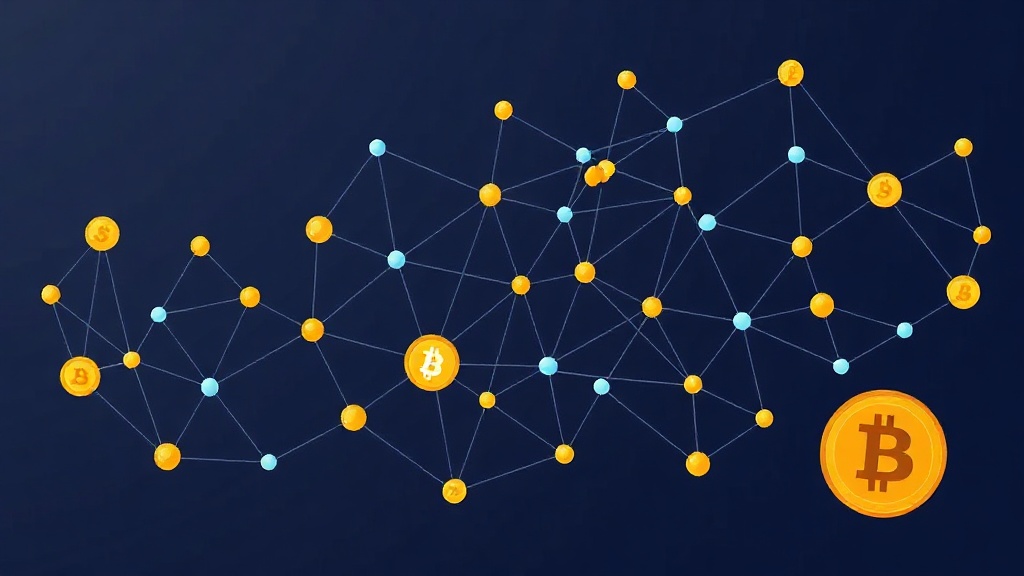
Graph community detection is a powerful technique used to identify clusters or groups of nodes within a network that are more densely connected to each other than to the rest of the graph. In simpler terms, it helps reveal hidden communities or subgroups where members interact more frequently or share stronger connections. This method is widely used in social network analysis, biology, cybersecurity, and even cryptocurrency privacy research.
For example, in a blockchain network, community detection can help identify groups of addresses that interact frequently, potentially uncovering coordinated activities such as money laundering or privacy-focused transactions. By analyzing the structure of these connections, researchers and analysts can gain insights into the underlying behavior of network participants.
Why Is Community Detection Important in Cryptocurrency Privacy?
Cryptocurrencies like Bitcoin and Monero are designed to offer varying degrees of privacy, but their transaction graphs still leave traces that can be analyzed. Graph community detection plays a crucial role in understanding these traces by:
- Identifying privacy risks: Detecting tightly-knit groups of addresses can reveal patterns that compromise user anonymity.
- Tracking illicit activities: Law enforcement and compliance teams use these methods to trace money flows in ransomware attacks or darknet markets.
- Enhancing privacy tools: Developers of privacy-focused cryptocurrencies can use community detection to test and improve their protocols.
For privacy-conscious users, understanding how community detection works can help them make more informed decisions about which cryptocurrencies and tools to trust with their financial data.
Key Algorithms for Detecting Communities in Graphs
Several algorithms are commonly used for community detection, each with its own strengths and weaknesses. Here are some of the most popular ones:
1. Girvan-Newman Algorithm
The Girvan-Newman algorithm is a hierarchical method that works by progressively removing edges with the highest betweenness centrality—a measure of how often a given edge lies on the shortest path between other nodes. As edges are removed, the graph naturally breaks into smaller communities. This approach is particularly useful for detecting overlapping communities where nodes may belong to multiple groups.
2. Louvain Method
The Louvain method is a fast and scalable algorithm that optimizes a metric called modularity to find communities. Modularity measures the density of connections within communities compared to what would be expected in a random network. The algorithm iteratively groups nodes to maximize modularity, making it ideal for large-scale networks like blockchain transaction graphs. Its efficiency makes it a popular choice for real-time analysis.
3. Spectral Clustering
Spectral clustering leverages linear algebra techniques, such as eigenvalue decomposition of a graph's adjacency matrix, to partition nodes into communities. This method is particularly effective for graphs with complex structures and can handle both disjoint and overlapping communities. However, it can be computationally intensive for very large graphs.
4. Label Propagation Algorithm (LPA)
LPA is a simple yet effective method where each node is initially assigned a unique label. Nodes then iteratively adopt the most common label among their neighbors. This process continues until all nodes have stable labels, effectively grouping them into communities. LPA is fast and works well for dynamic networks, but it may produce less accurate results for graphs with unclear community boundaries.
Practical Applications of Community Detection in Crypto Privacy
Community detection isn't just a theoretical concept—it has real-world applications in the cryptocurrency space, especially when it comes to privacy. Here are some practical ways it's being used:
Tracking Privacy Coin Transactions
Privacy coins like Monero and Zcash are designed to obscure transaction details, but their underlying networks still exhibit patterns that can be analyzed. By applying community detection, researchers can:
- Identify clusters of addresses that interact frequently, suggesting coordinated activities.
- Detect anomalies that may indicate attempts to break privacy protocols.
- Compare the privacy strengths of different cryptocurrencies by analyzing their transaction graph structures.
Enhancing Mixing Services
Mixing services (or tumblers) like CoinJoin or Wasabi Wallet aim to break the linkability of transactions. Community detection can help evaluate the effectiveness of these services by:
- Measuring the degree of mixing within transaction clusters.
- Identifying whether addresses remain linked despite using mixing services.
- Improving the design of future mixing protocols to better protect user privacy.
Detecting Sybil Attacks
Sybil attacks occur when a single entity creates multiple fake identities to manipulate a network. In cryptocurrency, this could mean creating numerous addresses to obscure the source of funds. Community detection helps identify these attacks by:
- Revealing unnaturally dense clusters of addresses with no real-world connections.
- Flagging groups of addresses that exhibit suspicious behavior, such as rapid fund movements.
- Assisting in the development of countermeasures to prevent Sybil attacks in decentralized applications.
Tips for Using Community Detection in Your Privacy Research
If you're interested in applying community detection to cryptocurrency privacy analysis, here are some practical tips to get started:
- Start with high-quality data: Ensure your transaction graph is accurate and up-to-date. Use APIs from blockchain explorers or dedicated tools like GraphSense or Chainalysis.
- Choose the right algorithm: Select an algorithm based on your network's size and structure. For large graphs, the Louvain method or LPA may be more efficient, while Girvan-Newman could be better for smaller, complex networks.
- Visualize your results: Use tools like Gephi, Cytoscape, or Python libraries (NetworkX, igraph) to visualize communities and identify patterns.
- Validate your findings: Cross-check your results with known data or external sources to ensure accuracy. For example, compare detected communities with known addresses from privacy coin transaction histories.
- Stay updated on privacy advancements: The cryptocurrency privacy space is evolving rapidly. Follow developments in zero-knowledge proofs, ring signatures, and other privacy-enhancing technologies to understand their impact on community detection.
Future Trends: Community Detection and the Evolution of Crypto Privacy
As cryptocurrencies and blockchain technology continue to evolve, so too will the techniques used to analyze them. Here are some future trends to watch in the intersection of community detection and crypto privacy:
Integration with AI and Machine Learning
Artificial intelligence and machine learning are becoming increasingly important in graph analysis. Future community detection methods may leverage deep learning models to identify patterns in transaction graphs that traditional algorithms miss. For example, graph neural networks (GNNs) could be used to predict community structures or detect anomalies in real time.
Enhanced Privacy Protocols
New privacy protocols, such as zk-SNARKs and zk-STARKs, are making it harder to analyze transaction graphs. As these technologies become more widespread, community detection methods will need to adapt. Researchers are already exploring ways to analyze privacy-preserving cryptocurrencies using techniques like differential privacy and homomorphic encryption.
Regulatory and Compliance Challenges
Governments and regulatory bodies are increasingly focusing on cryptocurrency privacy, particularly in the context of anti-money laundering (AML) and counter-terrorism financing (CTF). Community detection will play a key role in helping compliance teams identify suspicious activities while balancing the need for user privacy. This could lead to the development of privacy-preserving analytics tools that allow for compliance without compromising individual anonymity.
Decentralized Privacy Solutions
The rise of decentralized identity solutions and privacy-focused blockchain platforms (e.g., Mina Protocol, Secret Network) will likely drive innovation in community detection. These platforms aim to give users more control over their data while still allowing for meaningful analysis. Future community detection tools may need to operate in a trustless or permissionless manner to align with the principles of decentralization.
Conclusion: Empowering Privacy Through Graph Analysis
Graph community detection is a vital tool for uncovering hidden patterns in networks, and its applications in cryptocurrency privacy are vast. Whether you're a privacy advocate, a researcher, or a developer, understanding these techniques can help you navigate the complex landscape of blockchain privacy. By leveraging algorithms like Louvain or Girvan-Newman, visualizing transaction graphs, and staying informed about emerging trends, you can contribute to the development of more secure and private cryptocurrency systems.
As privacy technologies advance, so too will the methods used to analyze them. The future of community detection lies in the integration of AI, enhanced privacy protocols, and decentralized solutions—all of which will shape the next generation of cryptocurrency privacy tools. By staying ahead of these trends, you can ensure that your privacy research remains relevant and impactful in an ever-changing digital world.
Related articles
How Transaction Clustering Algorithms Work in Cryptocurrency Privacy
Unlocking Crypto Privacy: The Power of Value Fingerprinting Analysis
Understanding the Amount Correlation Heuristic in Crypto Privacy
Timing Correlation Attacks: How Hackers Exploit Cryptocurrency Privacy Flaws
How Wallet Software Fingerprinting Threatens Your Crypto Privacy
Looking for a privacy tool?
Browse every mixer, exchanger and Telegram bot in one place.