How to Trace Transaction Flows for Enhanced Crypto Privacy
Understanding Transaction Flow Tracing in Cryptocurrency
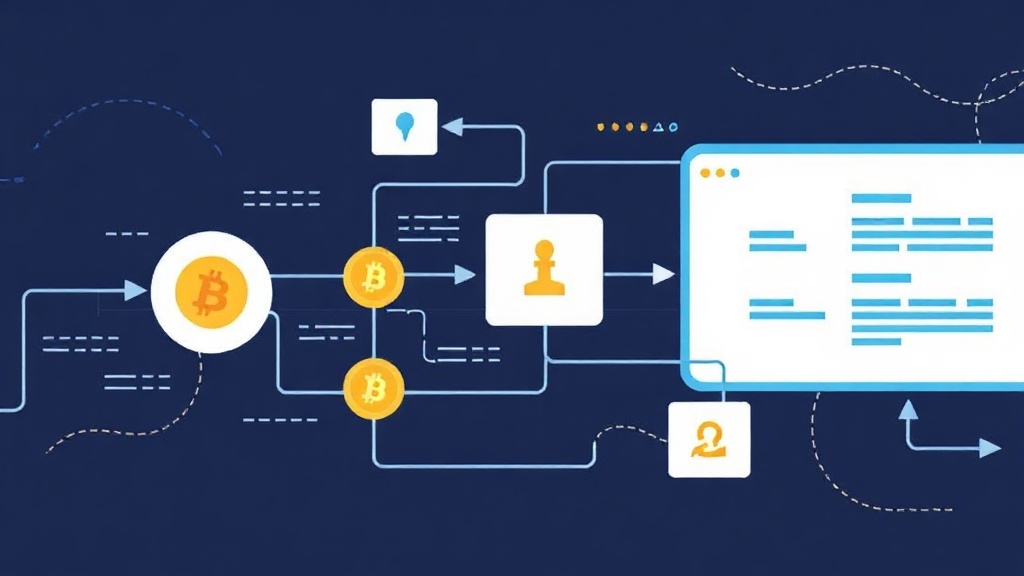
Transaction flow tracing is the process of tracking the movement of digital assets across blockchain networks. While this technique is often associated with law enforcement or compliance teams, privacy-conscious cryptocurrency users can also benefit from understanding how it works. By learning the fundamentals, you can take steps to protect your financial privacy and avoid unwanted scrutiny. Transaction flow tracing relies on analyzing blockchain data, which is publicly available but requires specialized tools and knowledge to interpret effectively.
Cryptocurrencies like Bitcoin and Ethereum operate on transparent ledgers, meaning every transaction is recorded permanently. This transparency is a core feature of blockchain technology, but it also means that anyone can trace the flow of funds from one address to another. For privacy-focused users, this presents a challenge: how can you maintain anonymity while still using cryptocurrencies? The answer lies in understanding transaction flow tracing and implementing strategies to minimize exposure.
Why Transaction Flow Tracing Matters for Privacy
Transaction flow tracing can reveal sensitive information about your financial activities. For example, if you receive funds from an exchange or a service that requires KYC (Know Your Customer) verification, those funds may be linked to your identity. Once traced, this connection could expose your entire transaction history to third parties, including employers, business partners, or even hackers. Understanding how tracing works helps you take proactive steps to protect your privacy.
Moreover, transaction flow tracing is not limited to direct transfers. Advanced techniques, such as address clustering and heuristic analysis, can link multiple addresses to a single user. For instance, if you use the same address for multiple transactions, an analyst might infer that all those transactions belong to you. Similarly, mixing services or privacy coins like Monero are designed to obscure transaction flows, making them harder to trace. By recognizing these risks, you can make informed decisions about how to manage your cryptocurrency transactions.
Tools and Techniques Used in Transaction Flow Tracing
Several tools and techniques are commonly used to trace cryptocurrency transactions. These range from simple blockchain explorers to sophisticated software that analyzes transaction patterns. Here are some of the most widely used methods:
- Blockchain Explorers: Websites like Blockchain.com, Etherscan, or Blockstream.info allow users to view transaction histories, balances, and address relationships. While these tools provide basic information, they are often the starting point for deeper analysis.
- Address Clustering: This technique groups multiple addresses that are likely controlled by the same entity. For example, if two addresses are used as inputs in the same transaction, they may belong to the same wallet. Tools like Chainalysis or Elliptic use advanced algorithms to cluster addresses and reveal hidden connections.
- Heuristic Analysis: Heuristics are rules of thumb used to infer relationships between addresses. For example, if an address sends funds to multiple recipients in a short time, it might be a mixing service or an exchange hot wallet. Similarly, if an address receives funds from a known exchange address, it could be linked to a user’s identity.
- Transaction Graph Analysis: This method visualizes the flow of funds across the blockchain, highlighting patterns such as peeling chains (where small amounts are repeatedly sent to new addresses) or coinjoin transactions (which mix funds from multiple users). Tools like OXT or BitcoinVisuals provide interactive graphs to help users understand these patterns.
While these tools are powerful, they are not infallible. Privacy-focused cryptocurrencies like Monero or Zcash use advanced cryptography to obscure transaction details, making them resistant to traditional tracing methods. Additionally, users can employ techniques like coin mixing or using privacy wallets to further enhance their anonymity.
Practical Tips to Protect Your Transaction Privacy
If you’re concerned about transaction flow tracing, there are several practical steps you can take to enhance your privacy. Below are actionable tips to help you minimize exposure and maintain financial anonymity:
- Use Privacy-Focused Wallets: Wallets like Samourai Wallet or Wasabi Wallet are designed with privacy in mind. They offer features like coin control (which lets you select specific inputs for transactions) and Stealth Addresses (which generate unique receiving addresses for each transaction).
- Avoid Reusing Addresses: Generating a new address for each transaction makes it harder for analysts to link your activities. Most modern wallets support hierarchical deterministic (HD) addresses, which automatically generate new receiving addresses.
- Use Coin Mixing Services: Services like JoinMarket or BitcoinMix allow you to mix your coins with those of other users, breaking the link between your original and destination addresses. However, be cautious when choosing a mixing service, as some may be scams or operated by malicious actors.
- Leverage Privacy Coins: Cryptocurrencies like Monero (XMR) or Zcash (ZEC) are designed to provide enhanced privacy. Monero uses ring signatures and stealth addresses to obscure transaction details, while Zcash offers shielded transactions that hide sender, receiver, and amount.
- Be Cautious with Centralized Services: Exchanges and other centralized services often require KYC verification, which links your identity to your blockchain addresses. If privacy is a priority, consider using decentralized exchanges (DEXs) or peer-to-peer (P2P) platforms that don’t require KYC.
- Use VPNs and Tor: When accessing blockchain explorers or privacy tools, use a Virtual Private Network (VPN) or the Tor network to mask your IP address. This prevents third parties from associating your online activity with your blockchain transactions.
- Avoid Publicly Linking Your Identity to Addresses: Be mindful of sharing your cryptocurrency addresses on social media, forums, or public profiles. Even a single link between your identity and an address can expose your entire transaction history.
By implementing these strategies, you can significantly reduce the risk of transaction flow tracing and protect your financial privacy. However, it’s important to remember that no method is 100% foolproof. Always stay informed about the latest developments in blockchain privacy and adjust your practices accordingly.
Future of Transaction Flow Tracing and Privacy Innovations
The landscape of transaction flow tracing and cryptocurrency privacy is constantly evolving. As blockchain analysis tools become more sophisticated, so do the techniques for preserving anonymity. One of the most promising developments is the rise of zero-knowledge proofs (ZKPs), which allow users to prove the validity of a transaction without revealing sensitive information. Projects like Zcash and Aztec Protocol are already leveraging ZKPs to enhance privacy.
Another innovation is the development of layer-2 privacy solutions, such as Aztec or Railgun. These solutions allow users to transact privately on top of public blockchains like Ethereum, shielding transaction details while still benefiting from the security and decentralization of the underlying network. As these technologies mature, they could make transaction flow tracing obsolete for most users.
Regulatory developments also play a role in the future of privacy. Governments and financial authorities are increasingly focused on combating illicit activities, which may lead to stricter oversight of privacy-enhancing technologies. However, the demand for financial privacy is unlikely to disappear, and innovators will continue to develop new tools to meet this need. For privacy-conscious users, staying ahead of these trends is key to maintaining anonymity in an increasingly transparent financial world.
Conclusion: Take Control of Your Cryptocurrency Privacy
Transaction flow tracing is a powerful tool that can reveal a surprising amount of information about your cryptocurrency activities. While blockchain transparency is a core feature of public ledgers, it doesn’t mean you have to sacrifice your privacy. By understanding how tracing works and implementing the right strategies, you can take control of your financial anonymity.
Start by using privacy-focused wallets, avoiding address reuse, and leveraging coin mixing services. Consider adopting privacy coins or layer-2 solutions for enhanced protection. Always be cautious when using centralized services and take steps to mask your online activity. Remember, privacy is not about hiding illegal activities—it’s about protecting your financial autonomy in a digital world.
As the cryptocurrency ecosystem evolves, so too will the tools for privacy and tracing. Stay informed, experiment with different techniques, and adapt your strategies to stay one step ahead. Your financial privacy is worth protecting, and with the right knowledge, you can navigate the blockchain with confidence.
Related articles

Entity Clustering in Blockchain: Enhancing Privacy and Security

Understanding Cluster Attribution Model for Enhanced Privacy in Crypto

How Bitcoin Address Deanonymization Works and How to Protect Your Privacy

On-Chain Deanonymization: How Blockchain Analysis Unmasks Crypto Users

Crypto Forensic Investigation: Tracing and Securing Digital Assets
Looking for a privacy tool?
Browse every mixer, exchanger and Telegram bot in one place.